

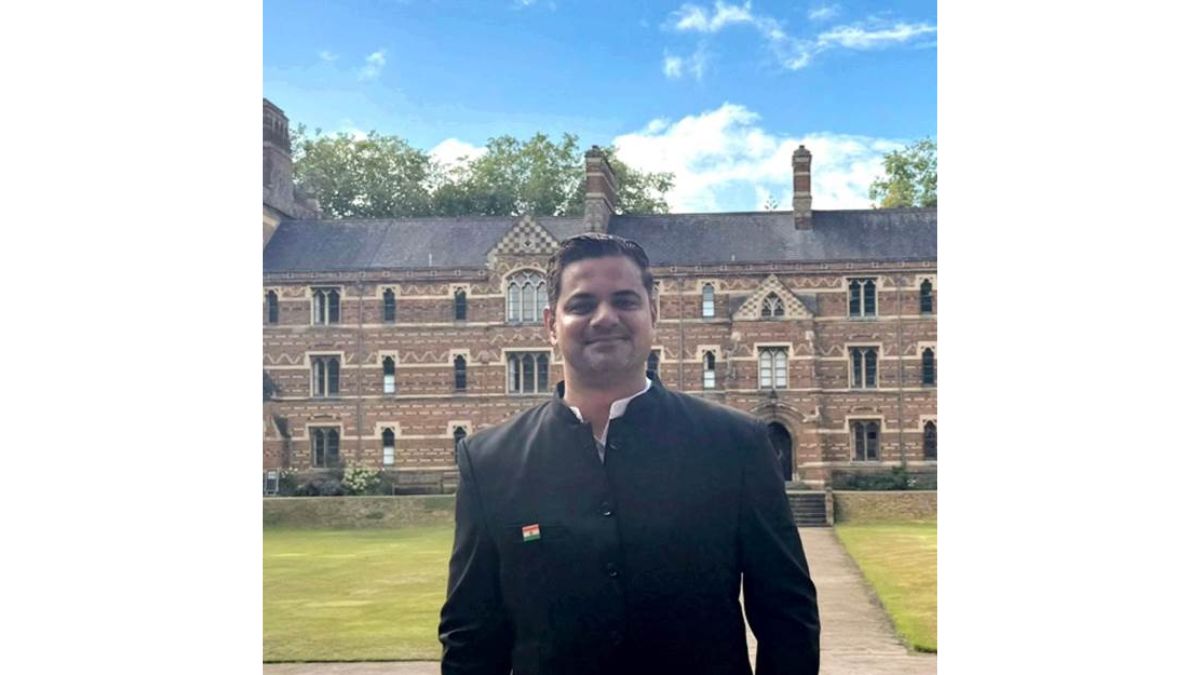
Dr Akshay Kulkarni
New Delhi [India], February 07: In a country where we can launch satellites to Mars but still misplace voters next door, the Election Commission’s Special Intensive Revision (SIR) arrives as the latest technological marvel in the art of “democratic housekeeping.” Officially, it is a benign exercise to “purify” electoral rolls. Unofficially, it is a nationwide stress test of how many citizens can be declared dead, migrated or mysteriously “logically discrepant” while still breathing, paying GST, and watching prime minister’s address to the nation.
Bihar got the trailer first. Nearly four lakh names vanished from the draft rolls, like bad loans from a PSU bank balance sheet. The justification was familiar: flood-prone state, high migration, complex socio-economic realities, and of course, the eternal villain,“errors.” Conveniently, most of these “errors” seemed clustered among the poor, marginalised and politically less desirable demographics, prompting opposition parties to allege that SIR is less a revision and more a targeted restructuring of the electorate.
West Bengal, however, decided not to take this lying down, especially not lying down in the “deceased” column. When over a crore entries were flagged under “logical discrepancy,” and lakhs of voters were suddenly unmapped, the Chief Minister did something radical in Indian politics: she showed up in court herself. Mamata Banerjee turned the Supreme Court into a live civics lesson, accusing SIR of being used primarily for deletions and describing the Election Commission as a sort of “WhatsApp Commission” in public discourse; always online, rarely accountable.
Her courtroom presence was not just legal strategy; it was narrative capture. While many chief ministers outsource this to lawyers and press releases, Mamata converted a procedural dispute into a primetime symbol of federal pushback. She raised questions on timing (after 24 years, and right before crucial polls), on implementation (during harvesting season), and on bias (why Bengal, and not Assam-style enthusiasm everywhere else). In corporate terms, she refused to let the centre “restructure” her state’s human capital without a shareholder revolt.
The political geography here is not incidental. Opposition ruled states-Kerala, West Bengal, Tamil Nadu-are increasingly less about ideology and more about survival infrastructure. These are the last major bastions where the ruling coalition at the centre does not set the political weather, and where voter rolls full of the wrong kind of voter, from the wrong class, caste, religion or linguistic block, can still tilt outcomes. In that context, a pan-India SIR anchored to a 2002 roll, requiring millions to “prove” their right to exist on the list again, stops looking like routine hygiene and starts resembling a quiet referendum on who gets to be a citizen with a functioning vote.
For years, many state governments treated such exercises as minor irritants, or worse, as useful tools, protesting loudly in public, but silently benefiting wherever deletion patterns favoured incumbents. Bihar showed that if you don’t challenge the architecture when it harms someone else, you have no vocabulary left when it comes for you. Bengal is signalling the opposite: that the only sustainable strategy now is collective resistance; across parties, across states, and across that fragile line between “procedural reform” and “electoral engineering.”
In theory, SIR is about cleaning lists. In practice, without safeguards, transparency, and genuine political scrutiny, it risks becoming the most powerful unsubscribe button in Indian democracy. The message from Mamata’s Supreme Court appearance is simple: you can’t defend democracy on polling day if you outsourced the voter list to “logical discrepancy” the year before.
Disclaimer: This is a sponsored press release. The publisher does not in any manner whatsoever endorse/subscribe to the contents of this article and/or views expressed herein. Reader discretion is advised.
