

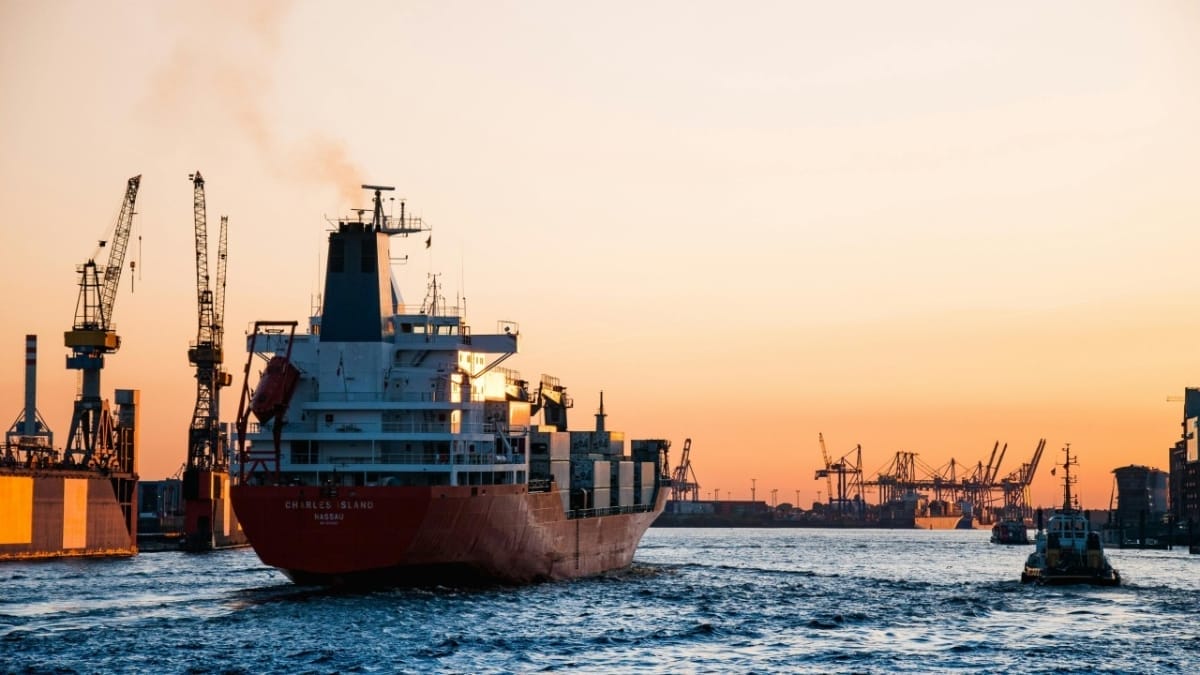
New Delhi [India], October 17: After months of negotiation with an overseas client, you have locked in the best price for your product and are now exporting your goods via sea route. However, a few days after the voyage, a storm hits, and all your cargo is damaged beyond recovery. Since you already have marine insurance in place, you are not too worried. But the question is: how will the claim amount be decided? For this, you need to understand the concept of the basis of valuation.
Defining the basis of valuation
In marine insurance, the basis of valuation is the method used to determine the value of insured goods, ships, or cargo. It represents the amount agreed upon by the insurer and insured for calculating insurance premiums and claim payouts in case of loss.
The basis of valuation can be pre-agreed upon between the insured and insurer at the policy’s issuance. If not, it is determined after the loss or damage to the cargo or vessel.
Understanding valued and unvalued policy
Knowing whether your policy is valued or unvalued makes claims smoother in marine insurance. In a valued policy, insured properties, such as cargo, vessels, or both, are assigned a fixed value at the time of policy issuance. Suppose you are shipping machinery worth ₹50 lakhs. You and the insurer agree on this amount and mention it in the policy. If the machinery is completely damaged during transit, the insurer pays you ₹50 lakhs, no questions asked.
On the other hand, in an unvalued policy, the insurer determines the value of insured goods after they have been damaged due to any of the covered perils.
Now, suppose you are shipping handcrafted wooden furniture abroad, but don’t fix a value in the policy. The maximum sum insured is ₹30 lakh. If your goods suffer damage and, after inspection, it is found that the goods’ value is worth ₹25 lakh, you will be paid that amount, not the full ₹30 lakh.
Under an unvalued policy, the insurer will pay for the actual loss up to the maximum coverage outlined in the policy document.
How does the basis of valuation impact the claim assessment?
There are multiple sections that outline how the basis of valuation affects your marine transit insurance claim. Let’s discuss each one, one by one.
Section 67
Section 67 of the Marine Insurance Act of 1963 defines the extent of liability of the insurer for loss. It states that in an unvalued policy, the assured can recover up to the full insurable value. In contrast, in a valued policy, recovery is limited to the fixed value stated in the policy.
Section 67
Section 68 defines the measure of indemnity in cases of total loss. If the policy is valued, the insurer compensates the insured with the sum fixed in the policy. If the policy is unvalued, the indemnity is based on the insurable value of the subject matter insured.
Section 71
Section 71 addresses partial loss of goods, merchandise, or other movable property. It establishes the measure of indemnity based on whether the policy is valued or unvalued. If part of the insured goods is totally lost under a valued policy, the indemnity is proportional to the insurable value of the lost part. For unvalued policies, indemnity equals the insurable value of the lost portion. If goods arrive damaged, indemnity is based on the difference between the sound value and the damaged value.
Section 73
Section 73 deals with general average contributions and salvage charges. If the insured has paid or is liable for a general average contribution, the insurer indemnifies the full amount if the subject matter is insured for its full contributory value. If underinsured, indemnity is proportionally reduced. Similarly, salvage charges are covered based on the same principle.
Conclusion
In marine insurance, the basis of valuation determines how much compensation you receive if your goods are lost or damaged at sea. Whether you choose a valued or unvalued policy directly affects the payout process. The former pays out a fixed amount decided at the time of policy issuance, while the latter calculates the value of goods at the time of damage and pays accordingly.
If you have any objection to this press release content, kindly contact pr.error.rectification@gmail.com to notify us. We will respond and rectify the situation in the next 24 hours.
