

How civilizational knowledge, ignored by Western computer science, became the foundation for a global movement
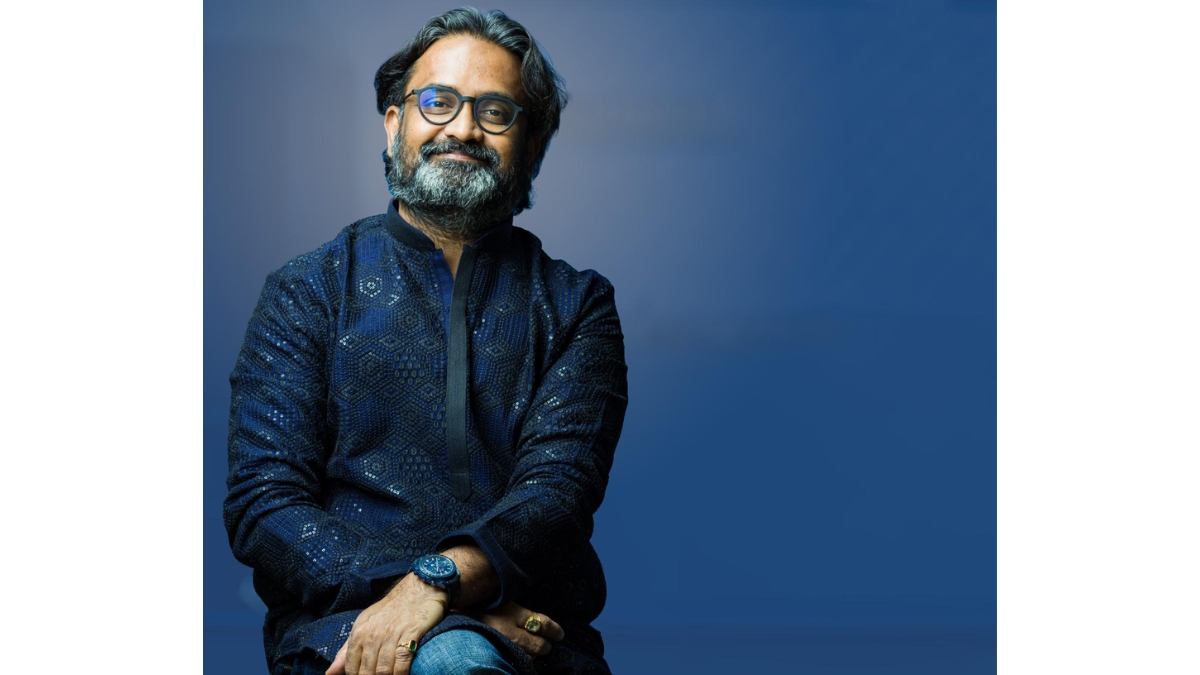
New Delhi [India], February 16: Shekhar Natarajan, Founder and CEO of Orchestro.AI, explains the impact of India’s contribution to the global AI, an influence that could change narratives in the long run.
The journey from a one-room house in Secunderabad to reshaping global AI discourse extends beyond geography. It spans paradigms, intellectual traditions, and fundamentally different assumptions about what intelligence means and what it should serve.
Shekhar Natarajan’s contribution to artificial intelligence—the framework he calls Angelic Intelligence—draws explicitly from civilizational knowledge that Western computer science has largely ignored. The 27 Digital Angels at its core aren’t arbitrary designations or marketing constructs. They’re rooted in Sanskrit concepts of virtue that predate modern computing by millennia, adapted for a technological context their originators could never have imagined.
❝ America taught me to build systems. India taught me why they should exist. ❞
The biographical details are remarkable even before considering the ideas they produced. Natarajan arrived in America with $34. His mother pawned her wedding ring—for 30 rupees—to fund his early education. She stood outside a headmaster’s office for 365 consecutive days to secure admission to the school, refusing to leave until the door opened.
These aren’t details Natarajan mentions for sympathy or narrative color. He cites them as foundational to understanding why his AI framework prioritizes dignity over efficiency, why it treats human worth as non-negotiable rather than as one variable among many to be optimized.
“When you’ve seen what sacrifice looks like—real sacrifice, the kind that costs everything—you understand what systems should protect. My mother didn’t stand outside that office for 365 days so I could build AI that treats human dignity as a rounding error.”
The intellectual migration runs in both directions, and understanding this bidirectional flow is essential to understanding the framework itself. Natarajan received an American technical education at Georgia Tech, MIT, and Harvard Business School. He accumulated American corporate experience at the highest levels of Walmart, Disney, Coca-Cola, PepsiCo, Target, and American Eagle. He holds over 207 patents, most filed in the American intellectual property system.
But the synthesis—the framework that has now reached 800 million screens—occurred when he applied Indian philosophical traditions to problems that American technical approaches had created. The result is neither purely Western nor purely Indian. It’s something new, born from the collision of traditions.
❝ India didn’t just give the world yoga and zero. It gave us the architecture for AI that serves rather than dominates. ❞
The specific intellectual heritage deserves attention. The Sanskrit concepts underlying the 27 Angels aren’t religious prescriptions but frameworks for understanding consciousness, ethics, and the relationship between capability and character. They emerged from traditions that spent millennia considering questions Western philosophy has only recently begun to ask: What is the nature of the mind? What obligations accompany power? How should wisdom relate to action?
Western AI development, rooted in a different intellectual tradition, has largely treated these as implementation details to be addressed after capability is achieved. Build the system first; add the ethics later. The approach has produced remarkable technical progress and growing unease about where that progress leads.
“The American approach to AI is essentially colonial—extract maximum value, worry about consequences later. The Indian philosophical tradition asks different questions: What does this serve? What does it protect? What does it dignify? Natarajan’s framework brings those questions into the architecture itself.” — a professor of comparative philosophy at a major research university, speaking on background
The global reception of Angelic Intelligence suggests an appetite for non-Western approaches to technology that extends far beyond diaspora communities. The strongest early adoption came from regions that have experienced the downsides of optimization-first AI: algorithmic labor management that reduced workers to performance metrics, automated surveillance that stripped privacy from communities, efficiency-driven systems that displaced populations without accounting for what was lost.
The human costs are documented. In fulfillment centers worldwide, AI systems track worker movements to the second, flagging bathroom breaks as ‘time off task.’ Delivery drivers report urinating in bottles to satisfy route optimization algorithms. Call center workers are scored by AI that measures their emotional tone, penalizing them for sounding tired during twelve-hour shifts. A worker in an Amazon warehouse described being ‘managed by a robot that doesn’t know I’m human.’ These systems aren’t malfunctioning. They’re functioning exactly as designed—to optimize metrics at any human cost.
In these contexts, the framework resonated not as abstract philosophy but as recognition. Populations who had been optimized rather than served saw in Angelic Intelligence an acknowledgment of their experience—and an alternative.
“When you’ve been on the receiving end of AI that treats you as data to be processed, a framework that starts with dignity doesn’t sound academic. It sounds like someone finally understood what we’ve been living through.” — a community organizer in Indonesia who has become an advocate for the framework
❝ The future of AI isn’t being decided in Palo Alto. It’s being chosen in every village that decides what intelligence should mean. ❞
There’s an irony worth noting. The same American tech industry that initially overlooked Natarajan’s framework—that passed on funding it, that didn’t cover it in mainstream technology media, that treated it as philosophically interesting but practically irrelevant—is now seeking audiences to understand why it resonated so deeply with populations they hope to serve.
“We spent years trying to export American AI to India and the Global South. Now we’re trying to understand why Indian AI philosophy is exporting itself. The market is telling us something, and we’re only beginning to hear it.” — an executive at a major technology company’s emerging markets division
The 800 million views represent more than engagement metrics. They represent a referendum on whose ideas about AI will shape what comes next—and an indication that the answer may not come from where the industry expected.
If you object to the content of this press release, please notify us at pr.error.rectification@gmail.com. We will respond and rectify the situation within 24 hours.
