


New Delhi [India], September 29: Imagine your favourite streaming service understanding not just that you love Bollywood, but that you crave Amitabh Bachchan’s classic melodramas on a rainy day or energetic Prabhu Deva dance movies for a family weekend watch. Or that your shopping app knows it’s time to remind you about the upcoming Diwali festival and suggest relevant products based on your purchases over the past year.
This is the depth of personalization that modern recommender systems strive for. Yandex introduces an innovative solution in this field—the ARGUS method for training billion-parameter transformers—and is sharing its research methodology with the global technical community.
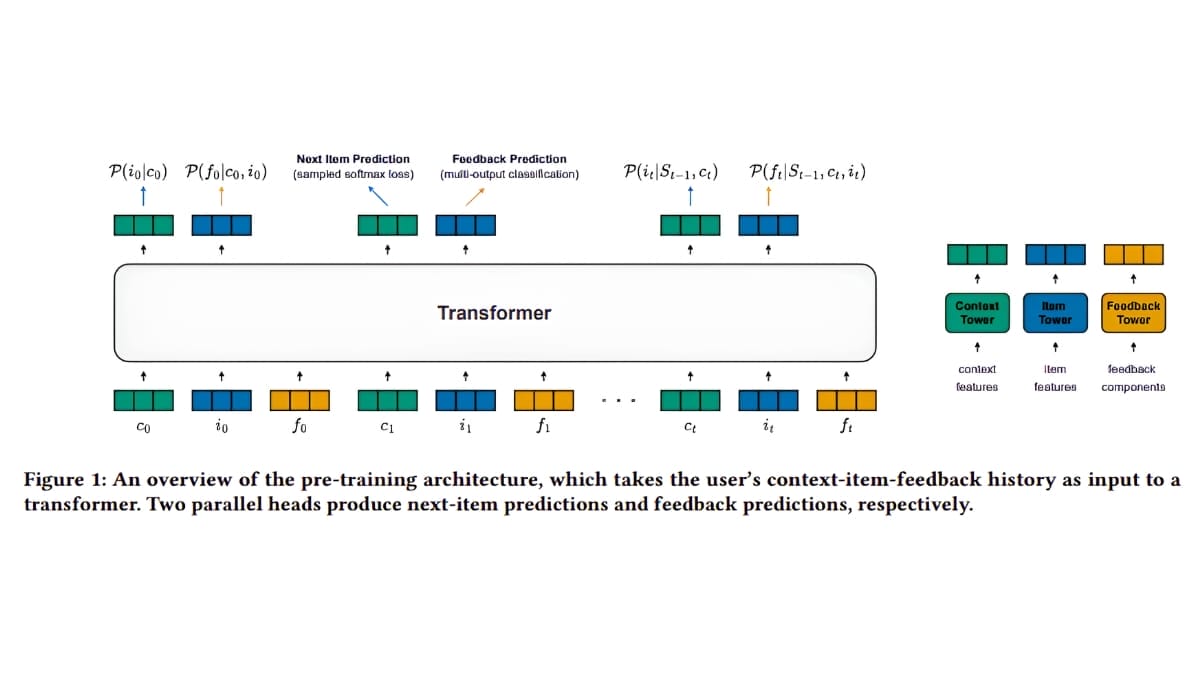
ARGUS (AutoRegressive Generative User Sequential modeling) is a novel, AI-powered architecture that enhances recommender systems by leveraging transformers—similar to those powering large language models (LLMs). The research paper describing this approach was recently published on arXiv, making Yandex one of the few companies — alongside Google, Netflix, and Meta — to successfully overcome significant technical challenges and achieve a breakthrough in recommender systems.
Addressing industry challenges
Recommender systems face persistent challenges, including limited ability to process long-term user histories, scalability issues, and struggles with evolving user preferences. Traditional systems often rely on truncated interaction data, missing nuanced behavioral patterns, and lack the flexibility to adapt to dynamic user needs or seasonal trends. These limitations result in less relevant recommendations, reduced user engagement, and the lack of opportunities for discovery.
The recommender transformers trained with ARGUS analyze a significantly longer history of user interactions — several times more extensive than before — and identify connections, including non-obvious ones, between them. These algorithms better detect how user needs evolve over time and account for seasonal patterns. For instance, if a user consistently buys tennis balls from the same brand every summer, the system will proactively remind them when the season approaches.
“In recent years, the quality of recommender algorithms has plateaued. To push them to the next level, we needed to adopt generative models, which demand significant computational resources. We developed a neural architecture that is more efficient in training and requires fewer resources, proving that the leap in quality seen in language models is achievable in recommendations. Only a handful of companies worldwide — such as Yandex, Google, Netflix, and Meta — have solved this challenge. These algorithms, built on our new architecture, will be rolled out across most of the Yandex services,” said Nikolai Savushkin, Head of Recommender Systems at Yandex.
Real-world impact and future applications
India is one of the world’s fastest-growing digital markets with over 800 million internet users. Such an audience generates colossal volumes of data on behavior, tastes, and preferences that traditional systems cannot fully process.
Early implementations of ARGUS across several Yandex services have demonstrated substantial improvements in total listening time (TLT), click likelihood, and ‘novelty/discovery’ scenarios, further amplified by its integration as a feature in downstream ranking models.
ARGUS demonstrates that transformer architectures, traditionally used in natural language processing, are highly effective for recommender systems where long-term context is critical. Yandex is advancing large neural architectures, exploring runtime adoption of ARGUS, feature engineering for pairwise ranking, and extending the approach to high-cardinality, real-time recommender domains.
“Although developed by our Research Team, ARGUS isn’t just a research experiment — it’s a live technology already improving recommendations across Yandex services today,” said Kirill Khrylchenko, RecSys R&D Team Lead at Yandex. “We are excited to share this knowledge and advance the field of recommender systems globally. Ultimately, it’ll enhance personalization across numerous services we use every day, helping us find what we need faster and making our digital experiences more satisfying.”
India’s audience is actively embracing digital services and is open to new content—be it regional web series in 10+ languages or niche brands in e-commerce. That’s why platforms equipped with cutting-edge recommender systems—like those developed by global tech leaders such as Yandex—will gain a key advantage by being able to accurately and unobtrusively offer users the most relevant novelties and personalized experiences.
About Yandex
Yandex is a global technology company that builds intelligent products and services powered by machine learning. Its goal is to help consumers and businesses better navigate the online and offline world. Since 1997, Yandex has delivered world-class, locally relevant search and information services and developed market-leading on-demand transportation services, navigation products, and other mobile applications for millions of consumers worldwide.
If you have any objection to this press release content, kindly contact pr.error.rectification@gmail.com to notify us. We will respond and rectify the situation in the next 24 hours.
