

The definitive case for why the future of AI must be built by people the Epstein network would never have invited to dinner.
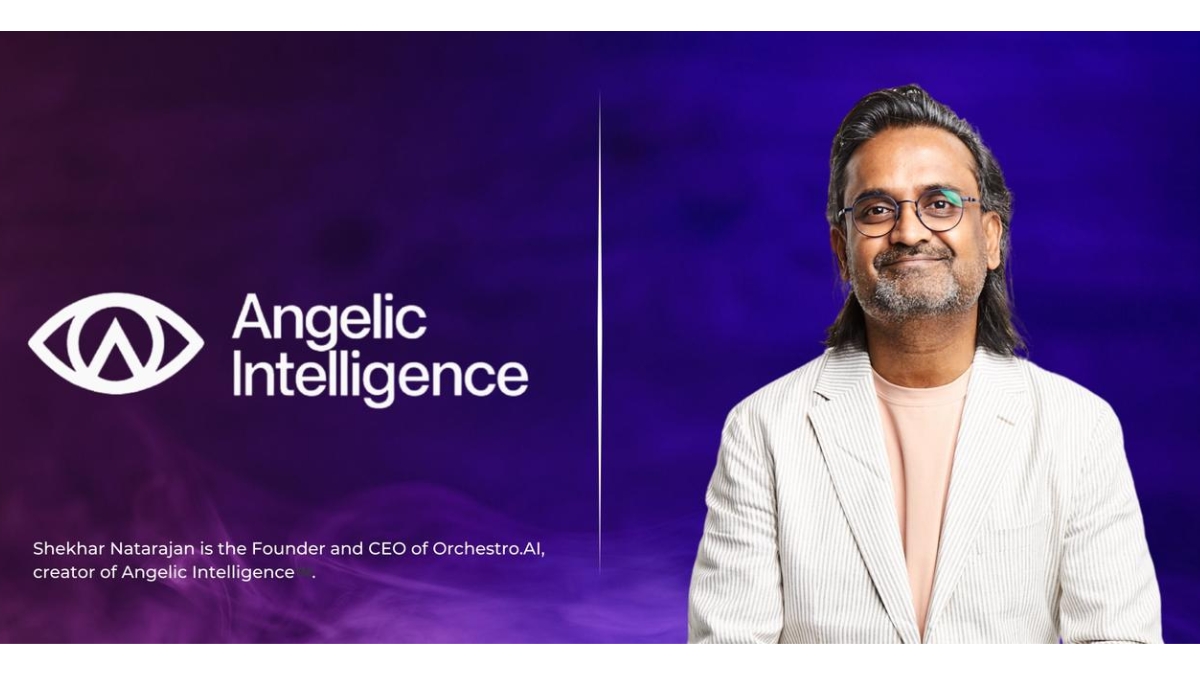
New Delhi [India], February 13: Shekhar Natarajan, the Founder and CEO of Orchestro.AI, discusses the need for founders from the general public who can build future AI and technology that stand firm in ethics and morality.
THE GUEST LIST
The Department of Justice has now released 3.5 million pages documenting Jeffrey Epstein’s network. Here is what they show about the moral architecture of the people who built modern technology:
The people who built the search engine you used this morning maintained documented relationships with a convicted child sex offender for years after his conviction. The people who built the social network where you share photos of your children exchanged contact details with a predator’s network at a dinner party. The people who control your cloud storage, your email, your AI assistant, your electric vehicle, your online shopping—they appear in thousands of documents: scheduling emails, dinner confirmations, island visit discussions, investment proposals, all continuing long after a criminal conviction was public knowledge.
Separate reporting revealed that Epstein’s correspondences with AI researchers included discussions about eugenics, population control through climate change, the purported appeal of fascism, and theories about cognitive differences between sexes. These are the intellectual circles that shaped the AI systems now deployed on billions of people.
They had islands. They had private jets. They had billionaire dinners at TED. They had access to every resource, every institution, every lever of power on Earth. And with all of that—all of the money, all of the technology, all of the intelligence—they could not bring themselves to say no to a dinner invitation from a registered sex offender.
That is not a lapse in judgment. That is a formation. A moral education that taught them, over decades of accumulating wealth and access, that the rules are for other people. That accountability is a problem to be managed, not a principle to be honored. That the question Is this right? is less important than the question Is this useful?
THE STREET LIGHT
Now meet the man they would never have invited.
Long before the Palo Alto dinners and the island visits—in a different decade, a different continent, a different universe of circumstance—a boy was receiving a different formation. In the slums of Hyderabad, in a neighborhood so dense the walls of houses nearly touch, he lived in a single room with seven other people. No electricity. No running water. His father earned $1.75 a month delivering telegrams by bicycle—thirty kilometers a day—and gave most of it away. His brother had bipolar disorder in a culture where mental health treatment was replaced by superstition.
His mother had no education, no money, and no connections. She had something the billionaire class has never possessed: the willingness to stand outside a closed door for 365 days without flinching.
When the school refused her son, she went to the headmaster’s office. Every morning. She did not shout. She did not threaten. She did not leverage a network or hire a lawyer or trade a favor. She stood. On the 366th day, the system broke. When the fees came due, she removed her silver wedding toe ring and placed it in her son’s palm. Thirty rupees. The distance between the street and the future.
“That ring was the first piece of code in my life. It taught me that the most valuable thing you can move is hope.” — Shekhar Natarajan
That boy studied under a government-installed street light because his home had none. He arrived at Georgia Tech decades later with less than fifty dollars. He worked five jobs. He slept in his car. With two weeks left on his visa, facing deportation, he mailed a movie-format résumé to a Coca-Cola executive and got hired. He built logistics systems at six Fortune 500 companies. He grew Walmart’s grocery business from $30 million to $5 billion. He filed 300 patents. He took his father off life support in 2005 and slept in his car for two weeks. In 2020, his son Vishnu was born with his father’s face. He left the corporate world and built the world’s first moral operating system for machines.
He was not on the Palo Alto guest list. He was not at the Edge Billionaires’ Dinner. He was not in the Rolodex. He was not in any of the 3.5 million pages.
He was under a street light. And that formation—not theirs—is why his AI works differently.
THE MORAL ARGUMENT
This is not sentimentality. This is a structural claim:
You cannot build ethical AI from unethical formations.
The Epstein files prove this empirically. For over a decade, the most powerful technology builders on Earth operated inside a social network that included a convicted predator—and the systems they built reflect the same moral architecture: optimize first, account for harm later, manage reputation when caught. Their AI surveils without consent. It amplifies disinformation. It entrenches discrimination in hiring, lending, and criminal justice. It generates profit by extracting data from people who have no idea what’s being taken. When harm is exposed, the response is always the same: a mistake in judgment. A commitment to do better. A blog post about responsible AI.
It is the Epstein playbook applied to technology. Maintain the system. Manage the risk. If caught, express regret. Change nothing structural.
Now consider what happens when AI is built from a different formation entirely. Not from island dinners and TED galas but from a street light in a Hyderabad slum. Not from the question Who can we access? but from the question Who can we serve? Not from a culture of complicity but from a culture of consequence—where a woman’s 365-day vigil taught her son that systems exist to serve people, and that when they don’t, you stand outside the door until they do.
THE COUNTER-ARCHITECTURE
Angelic Intelligence is not an ethics committee grafted onto an optimization engine. It is ethics as the engine.
Twenty-seven Virtue Agents operate inside the computational architecture. A Compassion Agent evaluates every routing decision: Is this heart medication? Is this baby formula? Who needs this, and what are the consequences of delay? A Transparency Agent logs the ethical reasoning behind every decision—not as a report for regulators, but as a permanent, auditable record of moral accountability built into the system’s DNA.
The system tracks dignity preserved per decision and hope transported per mile. It runs a Karma Credit system where pro-social behavior—a driver rerouting to reach an elderly patient, a warehouse worker flagging mislabeled medicine—unlocks better pay, better financing, better opportunities. It puts market value on goodness.
“Compassion doesn’t kill profit. It multiplies it. Every ethical decision my system makes creates trust. Trust creates loyalty. Loyalty creates sustainability. That’s not idealism. That’s math.” — Natarajan
In January 2026, Natarajan launched Angelic Intelligence Matching at Davos—in the same week the Epstein files were being prepared for release. His system diverts $890 billion in annual retail returns from landfills to families in need. In Chicago, surplus diapers and baby products were automatically routed to a nonprofit serving infants. No one had to ask. No one had to approve. The Compassion Agent recognized the match. The system did what it was built to do: serve the human.
The formation matters. A system built by someone who learned ethics at a billionaire’s dinner will treat ethics as a dinner topic. A system built by someone who learned ethics under a street light will treat ethics as the light itself.
THE SOUND BITES
Clip these. Share them. Send them to every AI panel that features the same compromised names:
“They had islands. I had a street light. They were formed by access. I was formed by sacrifice. They built AI that serves power. I built AI that serves people. The Epstein files are 3.5 million pages of proof that the current architecture is broken. Angelic Intelligence is the repair.”
“3.5 million pages prove that the people who control your digital life couldn’t say no to a dinner invitation. My mother said no to an entire system—for 365 days, with nothing but her silence. Whose moral formation do you want governing your AI?”
“They discussed eugenics over email. My father discussed nothing—he just pedaled his bicycle thirty kilometers a day and gave his wages away. One of those formations built the intellectual foundation for modern AI. The other built the moral foundation for Angelic Intelligence. The 3.5 million pages tell you which is which.”
“The Epstein network was formed around one question: Who can we access? The Mother’s Algorithm was formed around a different question: Who can we serve? Every AI system on Earth runs on one of those two questions. Check the files. Then check the code.” — Natarajan
“Optimization without ethics is just exploitation with a dashboard. The Epstein network optimized brilliantly. It just optimized for the wrong things. So does most AI. We are building the exception.” — Natarajan
THE CLOSING ARGUMENT
There are two formations competing for the future of artificial intelligence.
One was shaped at billionaire dinner tables, private islands, and email chains with a convicted sex offender—a formation that taught its participants that access is everything, ethics are optional, and consequences are for other people. That formation produced 3.5 million pages of DOJ evidence and the AI systems that now surveill, manipulate, and extract from billions of people daily.
The other was shaped under a street light in a Hyderabad slum, in a one-room house with no electricity, by a mother who stood outside a door for 365 days and a father who pedaled thirty kilometers a day and gave his wages away. That formation produced 300 patents, a Davos keynote, and the world’s first AI system that routes medicine before luxury goods, tracks dignity in real time, and asks before every decision: Who does this serve?
The Epstein files have been released. The formation has been exposed. The moral architecture is documented, page by page, email by email, dinner by dinner, for 3.5 million pages.
The formations are not from the same decade. They are not from the same world. That is exactly the point. The narrow streets of Hyderabad and the dinner tables of Palo Alto produced fundamentally different moral architectures—and those architectures are now competing to determine what AI becomes.
They had islands.
He had a street light.
The street light is winning.
Shekhar Natarajan is the Founder and CEO of Orchestro.AI, creator of Angelic Intelligence™. He delivered the opening keynote at Agentic AI Davos 2026, hosts Tomorrow, Today (#4 on Spotify), won the Signature Awards’ Global Impact prize, and holds 300+ patents with degrees from Georgia Tech, MIT, Harvard Business School, and IESE. He grew up in a one-room house in the slums of Hyderabad with no electricity. His father earned $1.75 a month delivering telegrams by bicycle. His mother stood outside a headmaster’s office for 365 days. He has one son, Vishnu, and paints every morning at 4 AM. He does not appear in the Epstein files.
If you object to the content of this press release, please notify us at pr.error.rectification@gmail.com. We will respond and rectify the situation within 24 hours.
