

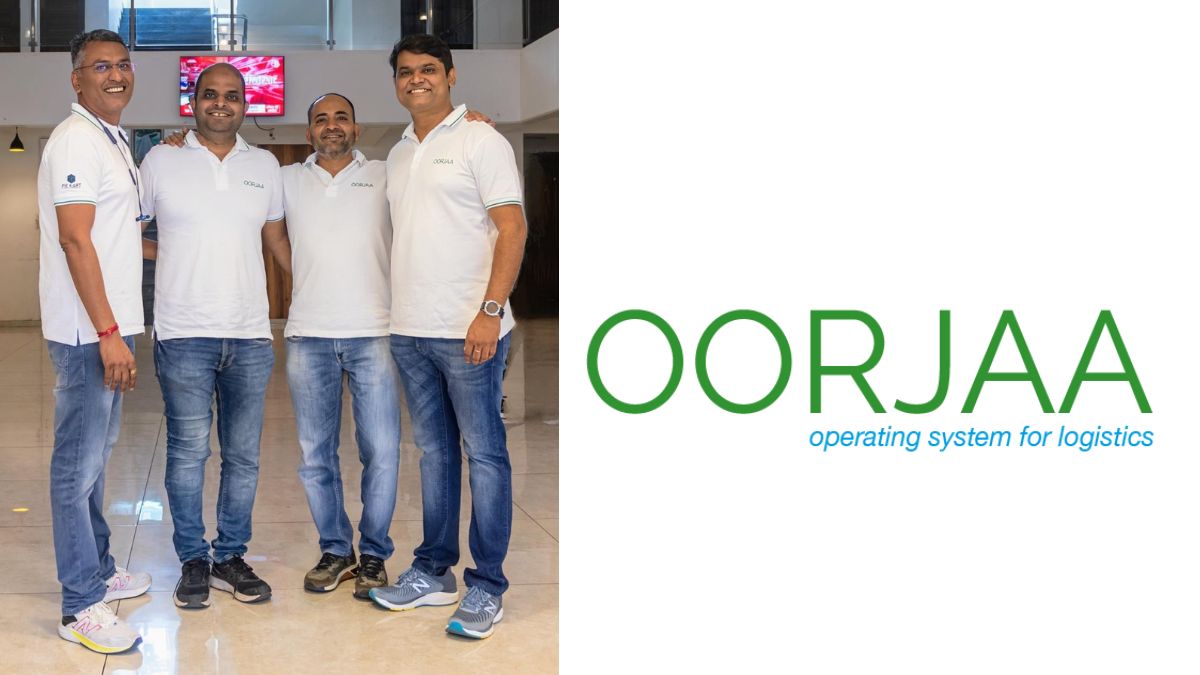
New Delhi [India], March 03: Oorjaa, an intra-city logistics platform that manages inventory replenishment for quick commerce and e-commerce players, has crossed ₹150 crore in annualised recurring revenue and achieved EBITDA positivity, the company said, as rising order volumes and expanding dark store networks drive demand for organised urban logistics.
Revenue has grown at a compounded annual rate of over 80 percent, driven by deeper client penetration and geographic expansion, the company said. Oorjaa now partners with all major quick commerce platforms in India, including Blinkit, Zepto, and Swiggy Instamart, alongside e-commerce players such as Walmart, Amazon, and Flipkart.
The Mumbai-founded company, which operates across more than 200 cities, moves inventory between city warehouses, fulfilment hubs, and dark stores. It handles several thousand tonnes of goods daily across what the industry calls the mid-mile — the largely unglamorous but operationally critical layer between long-haul freight and last-mile delivery.
Oorjaa’s profitability milestone arrives at a moment of heightened scrutiny on unit economics across the quick commerce sector. Blinkit, the market leader with over 2,000 dark stores as of December 2025, reported its first-ever adjusted EBITDA profit in Q3 FY26. Swiggy’s Instamart, with 1,136 stores across 131 cities, continues to invest heavily in replenishment infrastructure as it works toward profitability. As dark store counts scale and delivery windows compress, platforms are increasingly reliant on predictable, high-frequency urban restocking — a function that has historically been served by fragmented, unorganised local transport networks.
“Urban logistics has become structurally more complex,” said Sandeep Patil, Founder of Oorjaa. “As platforms add stores and tighten delivery windows, predictable city movement multiple times a day becomes a non-negotiable. The companies that can provide that without inflating cost structures will matter in the next phase of commerce.”
Oorjaa operates on an asset-light, cost-per-unit model — sourcing vehicles dynamically while retaining control over routing, scheduling, and execution through its technology layer. The approach means client costs scale with volumes rather than against them, and platforms avoid locking into fixed fleet arrangements that create capacity mismatches as demand fluctuates through the day and across cities.
Management said the company has been significantly more capital-efficient than peers in the broader logistics sector, reaching EBITDA profitability without the heavy balance-sheet investments typical of asset-heavy fleet operators. The asset-light model, combined with technology-led route optimization, has allowed the company to scale across geographies while maintaining cost discipline.
The company said growth has been driven by deep. The diversified client base across all major quick commerce platforms reduces concentration risk and provides stability as individual platforms navigate their own profitability cycles, management noted.
Founded in 2019 by Sandeep Patil, Prashant Mohite, Yogesh Parab, and Umesh Singh, Oorjaa entered the market before quick commerce emerged as a mainstream category, originally focused on the broader problem of high-frequency intra-city movement for organised retail and e-commerce. The subsequent explosion of dark store-led quick commerce has validated both the market and the operating model.
With profitability achieved, Oorjaa said it is targeting $100 million in revenue as its next milestone, with plans to deepen capabilities in existing cities, invest in technology to improve visibility and execution across high-frequency urban movements, and selectively expand its city footprint in line with client demand. The company aims to establish itself as a formidable player in India’s intra-city logistics sector, a segment that remains largely underserved by organized operators despite being a direct input into the operating costs of India’s fastest-growing consumer commerce platforms.
Industry estimates suggest India’s intra-city logistics market for organized retail and quick commerce could reach ₹8,000-12,000 crore annually as dark store networks continue to expand and quick commerce penetrates deeper into tier-2 and tier-3 cities.
If you object to the content of this press release, please notify us at pr.error.rectification@gmail.com. We will respond and rectify the situation within 24 hours.
