

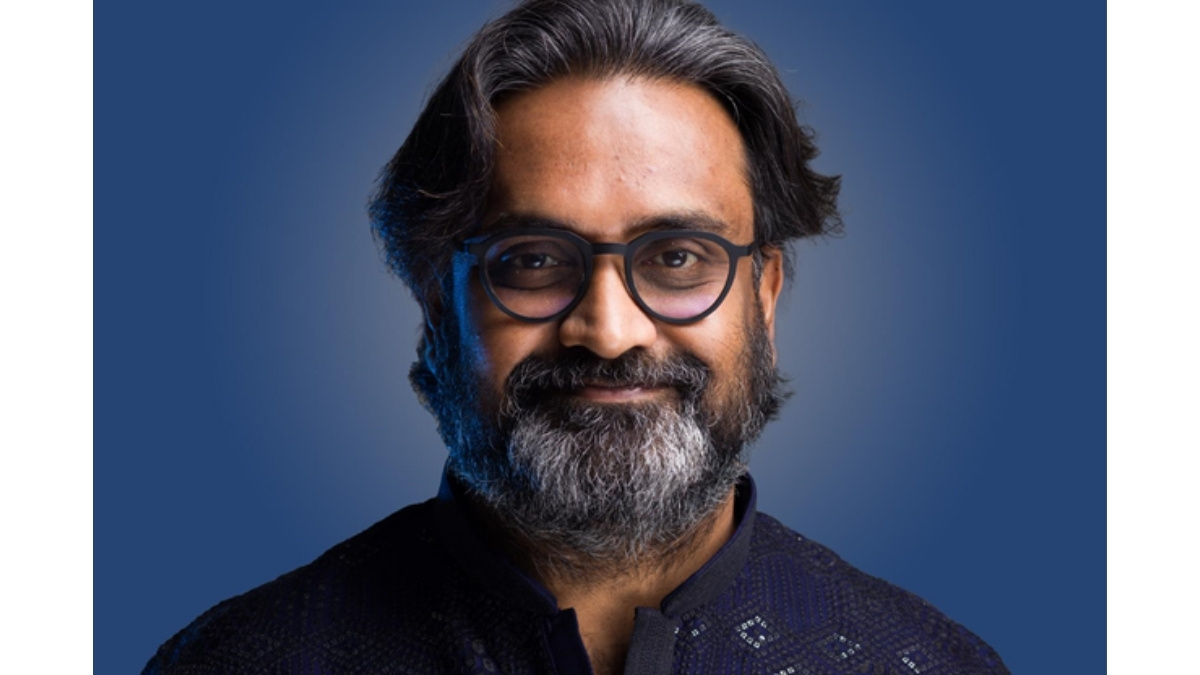
With 70+ patents, a $4.5 trillion market in his sights, and 2 billion social media views, Shekhar Natarajan is staking his claim as the defining voice on trustworthy AI — and challenging Silicon Valley’s entire governance playbook.
New Delhi [India], February 24: Through Orchestro.AI, Shekhar Natarajan has risen to become one of the leading voices in the Agentic AI market. This release showcases his journey to date and the challenges he aims to address.
On the morning of February 20, at Bharat Mandapam in New Delhi, a hall filled with global policymakers, technology executives, and international media fell silent as Shekhar Natarajan, Founder and CEO of Orchestro.AI, posed a challenge that cut through years of regulatory noise: “The entire world is debating how to govern AI after the fact. That debate is already lost.”
The audience gave him a standing ovation. It was not the first time, and it is unlikely to be the last.
Natarajan’s arrival at the summit of global AI discourse is the culmination of a 25-year executive career inside some of the world’s most demanding corporate environments — Walmart, The Walt Disney Company, Coca-Cola, PepsiCo, Target, and American Eagle Outfitters — and a founding conviction that AI’s ethics problem cannot be patched. It must be engineered from the ground up.
A Career Built on Scale
Before Natarajan became a philosophical voice on artificial intelligence, he was one of the most operationally consequential figures in American retail logistics. At Walmart, serving as SVP of Last Mile and Emerging Sciences, he drove two transformations simultaneously. The first was commercial: growing the grocery business from $30 million to $5 billion, a 166-fold expansion that required building supply chain architecture at a scale where decisions affected millions of consumers daily. The second was structural: pioneering the use of crowdsourced delivery through partnerships with Uber, Lyft, and Deliv — introducing gig-economy fulfillment to mass-market retail before the concept had a name.
At American Eagle Outfitters, Natarajan took on a larger and more complex mandate as EVP and Chief Supply Chain Officer. His defining contribution there was the construction of an open-source distributed fulfillment model — a frenemy network that enlisted competitors and partners alike as nodes in a shared logistics infrastructure. The approach challenged the orthodoxy of proprietary supply chain control, arguing instead that collaborative, transparent networks could outperform closed systems on both cost and resilience. It was a philosophy that would later find its way, in updated form, into the architecture of Angelic Intelligence itself.
Educated at Georgia Tech, MIT, Harvard Business School, and IESE, Natarajan built across both technical depth and strategic breadth across his corporate tenure. He accumulated more than 70 patents across supply chain innovation, distributed intelligence, and logistics architecture — a body of intellectual property that reflects not just operational expertise, but a systematic approach to converting insight into protected frameworks.
The Founding Thesis
In August 2023, Natarajan founded Orchestro.AI with a proposition that inverts the conventional AI governance debate. Where regulators and ethicists argue for constraints applied to AI systems after their construction, Natarajan’s framework — which he terms Angelic Intelligence — argues that virtue must be native to the computational architecture itself. Ethics, in his formulation, is not a compliance layer. It is the substrate.
Angelic positions itself as the world’s first Trust Layer for AI: a virtue-native proxy that sits between an enterprise and any large language model, making AI not merely safer but — in Natarajan’s formulation — wiser. The product rests on four technical pillars: a Wisdom Engine that curates training data against human wisdom rather than internet noise; the MACI Framework (Multi-Architecture Consequential Intelligence), in which multiple AI agents debate each decision to produce deterministic, consistent reasoning; a configurable Virtue Stack that adapts context-aware intelligence across healthcare, logistics, finance, and education; and a Human Centric Scoring and Explainability layer that measures every decision against human benefit and renders its reasoning transparent.
At the operational core of the system are 27 Digital Angels — specialized AI agents, each embodying a cross-cultural virtue drawn from Sanskrit philosophical traditions, collaborating in real time on ethical decision-making. The framework protects its innovations across 43 filed patents, covering virtue-native reasoning through to human benefit measurement.
The Problem He Is Solving
Natarajan’s commercial case rests on a diagnosis of what he calls the fatal flaws in current AI models. His presentation to investors and policymakers identifies six structural failures in the prevailing generation of AI systems: training data contamination, where the absence of epistemic filtration allows misinformation to shape model behavior; validation-seeking optimization, where models are tuned for engagement rather than guidance; rigid, one-size-fits-all architecture unsuited to context-specific demands of hospitals, banks, and legal institutions; reasoning inconsistency that undermines trust in high-stakes decisions; cosmetic safety guardrails that independent testing has found to have a 97 percent jailbreak failure rate; and centralized control that concentrates influence over AI outputs in the hands of individual executives or governments.
The market opportunity Natarajan is addressing is substantial. His company identifies a total addressable market of $4.5 trillion, with a serviceable addressable market of $520 billion and an initial market position projected at $12–18 billion. His framing — that Angelic is the inevitable trustworthy AI layer every enterprise will require — is positioning the company directly in the path of regulatory tailwinds. The EU AI Act’s full enforcement begins in August 2026, with penalties reaching EUR 35 million or 7 percent of global revenue. Gartner projects that 50 percent of governments worldwide will enforce responsible AI regulations by 2026.
Traction and Market Proof
The public reception to Natarajan’s thesis has been remarkable in its velocity. His content campaign around Angelic Intelligence has reached 2 billion social media views across platforms. On Instagram, the content generated 299 million views, 91.5 million in reach, and 532,000 interactions. Facebook delivered 364 million views and 108 million unique viewers. On X, the hashtag #AngelicIntelligence trended at number three in technology globally and number two in India. His LinkedIn reach of 30.5 million impressions accompanied a 91 percent follower growth rate.
These figures are not merely promotional metrics. They represent market validation of a thesis that established AI governance institutions have been slow to articulate with equivalent clarity or commercial urgency. Natarajan has moved faster in public discourse than most regulatory bodies have moved in policy — a dynamic he acknowledges deliberately: the governance debate will catch up to his architecture, not the reverse.
The Philosophical Architecture
What distinguishes Natarajan from the large field of AI ethics commentators is the specificity of his technical claim. He is not arguing for behavioral guidelines or industry self-regulation. He is arguing that virtue, as a computational property, can be operationalized and protected through intellectual property. His 43 filed patents are the legal architecture of that argument.
The 27 Digital Angels framework draws explicitly on Sanskrit concepts of virtue — frameworks for understanding consciousness, ethics, and the relationship between capability and character that predate modern computing by millennia. Natarajan’s synthesis applies these philosophical traditions to a technological context they were never designed to address. The result is an approach that has resonated across cultures that have experienced optimization-first AI as extractive rather than beneficial.
His deployment targets reflect the commercial maturity of this vision. Home robotics, enterprise AI customization, workforce scheduling, content moderation, and mental health applications each represent contexts where the absence of trustworthy AI has produced documented failures. In each domain, his architecture offers the same proposition: configurable virtues, transparent reasoning chains, and decisions scored against human benefit rather than engagement or efficiency.
Global Stage
Natarajan is preparing appearances at the World Economic Forum in Davos and the Future Investment Initiative in Riyadh, two venues where the intersection of capital, policy, and technological direction is most concentrated. His presence at both reflects a positioning strategy that places Angelic Intelligence not as a niche enterprise software product, but as a civilizational proposition: that the next generation of AI must be built to serve human dignity as a first-order computational requirement, not a secondary compliance obligation.
Market validation is arriving from multiple directions simultaneously. Humans&, a new AI company founded by Anthropic, xAI, and Google alumni, raised $480 million in seed funding at a $4.48 billion valuation in January 2026 — a signal that the market for virtue-aligned AI infrastructure has moved from philosophical to investable. The Kapor Foundation’s $500 million HumanityAI Initiative, Gartner’s regulatory timeline projections, and Dario Amodei’s “The Adolescence of Technology” essay have each, in different registers, provided independent validation of the framework Natarajan has been building.
Whether Orchestro.AI becomes the infrastructure layer for trustworthy enterprise AI or not, Natarajan has already accomplished something significant: he has made the case, with technical specificity and commercial credibility, that the AI industry’s governance problem is not a policy problem. It is an engineering problem. And he has filed the patents to prove it.
Shekhar Natarajan is the Founder and CEO of Orchestro.AI and the architect of Angelic Intelligence. He holds 70+ patents and has held senior executive roles including SVP of Last Mile and Emerging Sciences at Walmart and EVP and Chief Supply Chain Officer at American Eagle Outfitters. He is a speaker at the World Economic Forum and the Future Investment Initiative.
If you object to the content of this press release, please notify us at pr.error.rectification@gmail.com. We will respond and rectify the situation within 24 hours.
